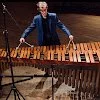
Okay, so I got a great suggestion to look at a different style of competition. This time, I looked through the Southern California Marimba Competition, and funny enough, I actually competed in this one, so you might see my name appear in this dataset.
Before getting into the music, this was an online competition, even after in-person events had returned, which I still have mixed feelings on, but very much enjoy how accessible it becomes compared to having to shell out thousands of dollars for a marimba competition.
The selections below come from the documented semifinal and final programs across the Scholastic Solo, Open Solo, and Open Duo categories. We are looking at recorded competition submissions, rather than programs performed together at a live event.
The repertoire sheet contains 50 program listings across those three categories. Some works return in another round, and some players programmed several selections. As always, this is a look at the repertoire documented in the competition’s published data and YouTube video premieres. (links here: Duo/Scholastic Semi-Finals, Open Semi-Finals, Finals)
The Scholastic Solo category gives us a nice mix of familiar student repertoire and some ambitious choices. Blake Tyson’s A Cricket Sang and Set the Sun and Takatsugu Muramatsu’s Land appear alongside Dave Hall’s Apocalyptic Etude, Casey Cangelosi’s Character No. 2, and the second movement of Tomasz Goliński’s Luminosity. Eli M. Gold programmed Gene Koshinski’s Variations (after Viñao) in the semifinal and both movements of Toshimitsu Tanaka’s Two Movements for Marimba in the final.
I like seeing this range in a younger division. It gives students several ways to think about what they want to communicate, whether that is through a lyrical line, more rhythmic drive and energy, or a complete work with a larger musical structure. A competition program can show more than how many notes you can play as fast as possible, although there was certainly no shortage of opportunities for that here. Arnor Chu’s Until Dawn appears twice, both times programmed by Leon Wang. It was interesting to see the same performer program a work in both rounds.
Moving into Open Solo, we get more of the familiar competition names from previous spreadsheets. Joseph Schwantner’s Velocities appears three times, while Andrew Thomas’s Merlin and Yasuo Sueyoshi’s Mirage pour Marimba each appear twice. But there is plenty to explore beyond those repeated works. Takashi Yoshimatsu’s Birdscape, Michael Jarrell’s Entlehnungen, Attila Reményi’s Strokes, and selections from Kevin Bobo’s The Odyssey, According to Penelope all appear. Andrew Chen also programmed an excerpt from Steven Mackey’s See Ya Thursday.
The adaptations also deserve attention. Tanel-Eiko Novikov paired Rhythmic Caprice with his arrangement of Paganini’s first caprice in the semifinal. His final selections included Cangelosi’s Etude in A minor No. 2 and his arrangement of Piazzolla’s Invierno Porteño. I highly recommend going and listening to these recordings if you haven’t already. Tanel is an amazing player with a great approach to adaptations on the marimba. Bach appears too, with a cello-suite prelude in the Scholastic division, a fugue excerpt in Open Solo, and the Chaconne in Jose Uzcategui’s final program.
The duo category is where my name enters the spreadsheet. Chu Wen Ong and I, performing as ACnd Duo, submitted “IV: Dance Groove Drifting” from Alejandro Viñao’s Book of Grooves for the semifinal. Other duo selections included Ivan Trevino’s 2300 Degrees, Arkadiusz Katny’s Chain II, Gordon Stout’s Skylark Orange Circles, and Michael Taylor’s Rhapsody for Vibraphone and Marimba.
The final programs offer some particularly interesting combinations. Kōu Duo programmed Michael Burritt’s Sweet Dreams and Time Machines alongside Ravel’s Alborada del gracioso. MouSai Duo selected Pius Cheung’s arrangement of Gershwin’s Rhapsody in Blue, while Köng Duo brought together selections by Patrick Hart, Tona Scherchen-Hsiao, and Fish Yu. Köng’s program is worth a listen if you don’t already know the pieces. Some are very underplayed duo works that I wish had more ears on them.
Below, you will find the repertoire sheet organized by division. Hopefully, something catches your attention and earns a spot on your listening list this week!